
 This is a classic case among the requests we receive. A 1980s house built in concrete blocks (internal insulation in glass wool and plasterboard), heated by electric convectors plus logs as back-up (fireplace with insert in the living room).
The clients therefore wanted to do without electric heating as far as possible by replacing the insert with a high-efficiency heater. That is how they settled on a heat-storage stove; here it covers almost all of the heating needs (the convectors are used for frost protection when the house is empty and in very cold weather in the rooms furthest from the heater).
 It was proposed to open up the living-room wall and set the heater into it, so that the rear face would directly heat the extension built a few years earlier.
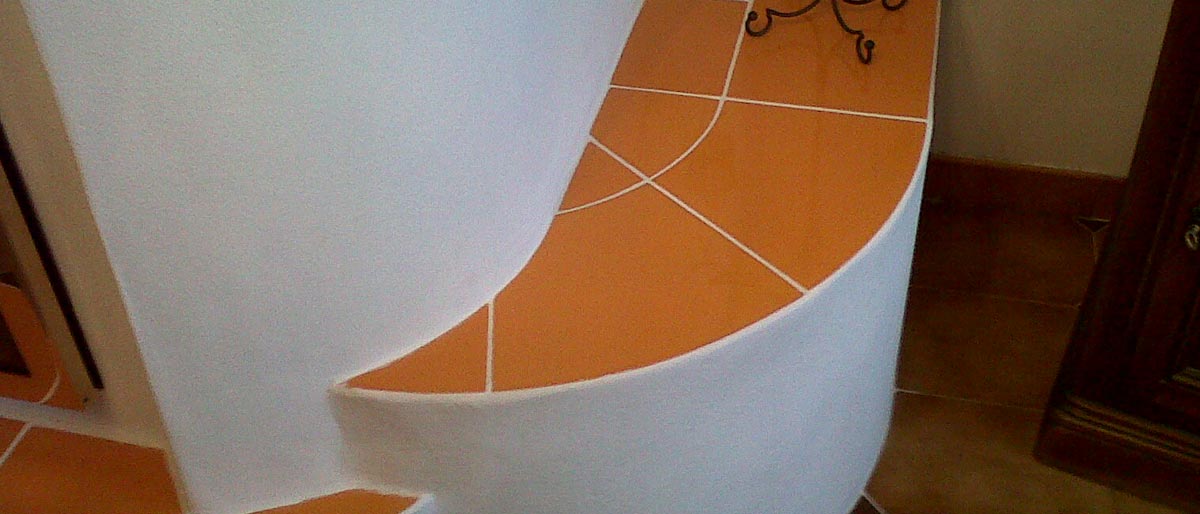
The existing chimney, built of clay flue blocks, is reused. The flue connection is built into the heater’s cladding. The cladding is made up of several curves including benches and a fire shelf covered in stove tiles. The first tier is chamfered and a few touches of mosaic are set into the render. It is a double-skin heat-storage stove whose core and cladding are made of ceramic (firebrick).
 Technical specifications:
- Output: 5.93 kW
- Load capacity: 22 kg
- Log length: 33 cm – 50 cm
The quarter-circle bench, tiled in a fan pattern
The curve does not stop at the heater body. The bench describes a quarter circle: it starts at the heater, turns the corner of the room and ends at the wall, in one continuous curve with a rounded nosing.
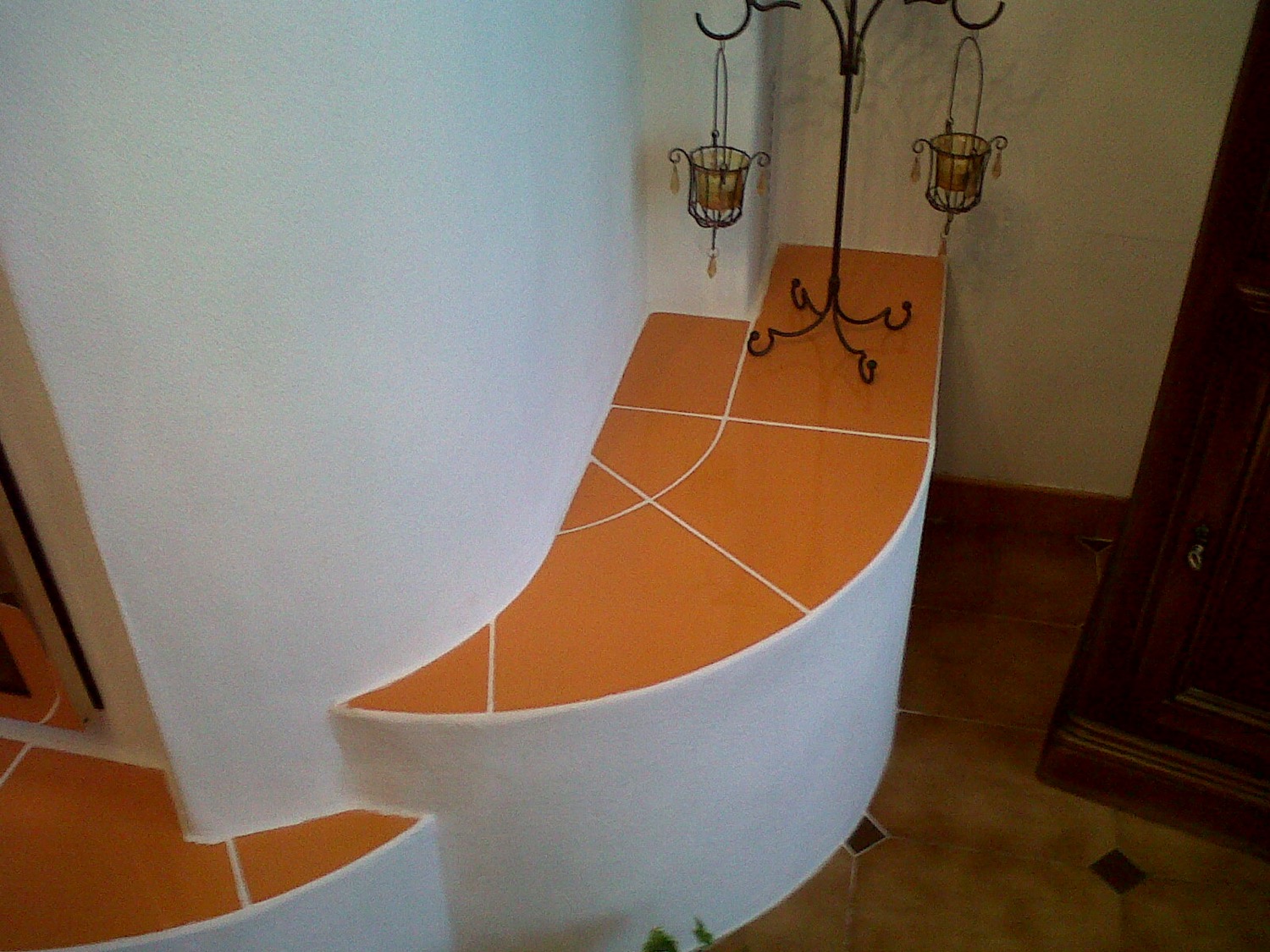
The top is covered with terracotta tiles laid in a fan pattern, each joint radiating from the centre of the curve. The layout is marked out on the floor before the first tile goes down, and every tile on the outer edge is cut at a different angle.
Terracotta is not just a matter of looks: it makes a seat that is warm to the touch, rising in temperature with the mass — where a hard stone would stay cold longer.


