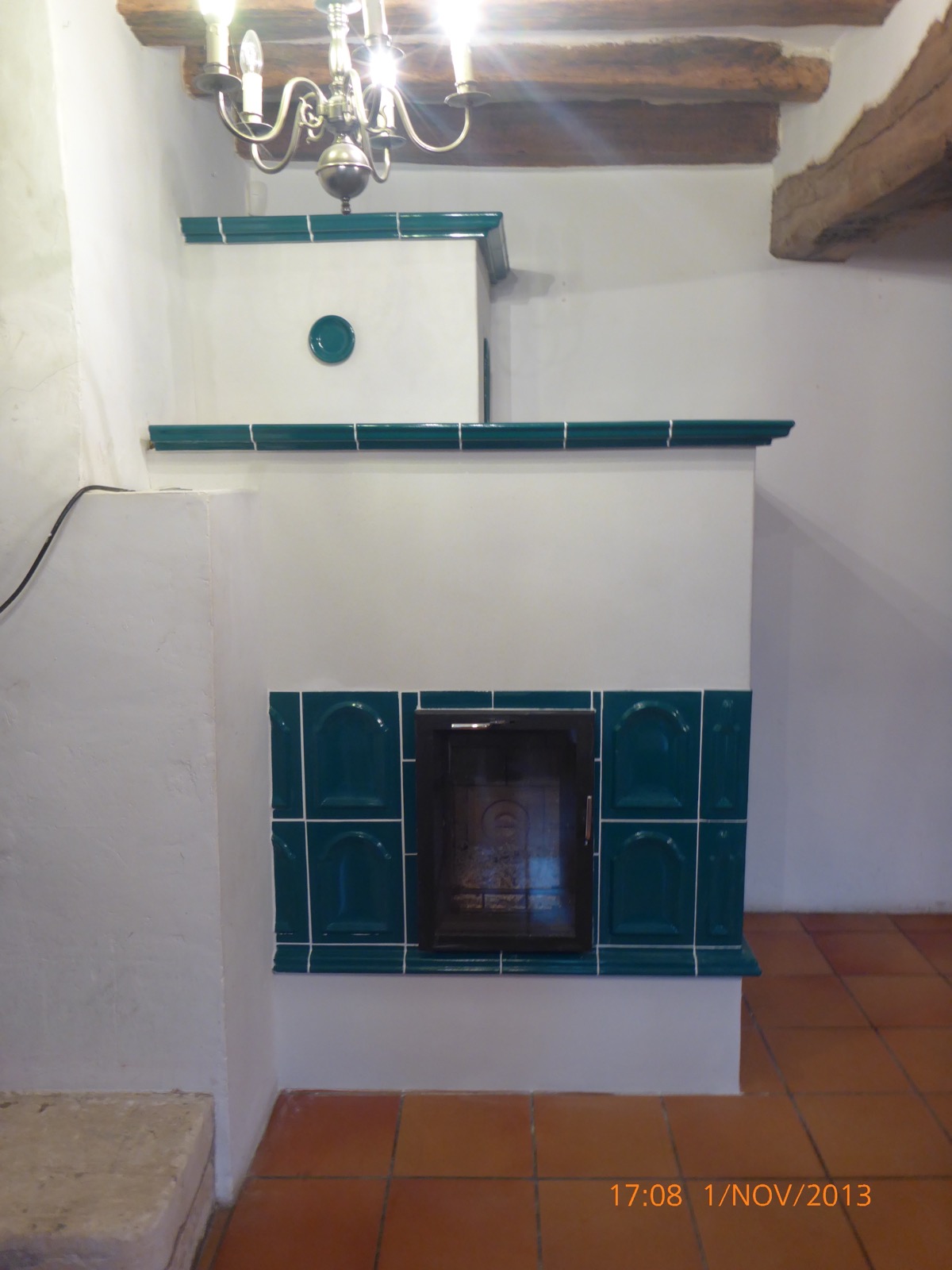
Not every masonry heater is built brick by brick. There is a second route: large-format prefabricated ceramic elements, factory-moulded to the dimensions of the project, assembled on site with refractory mortar.
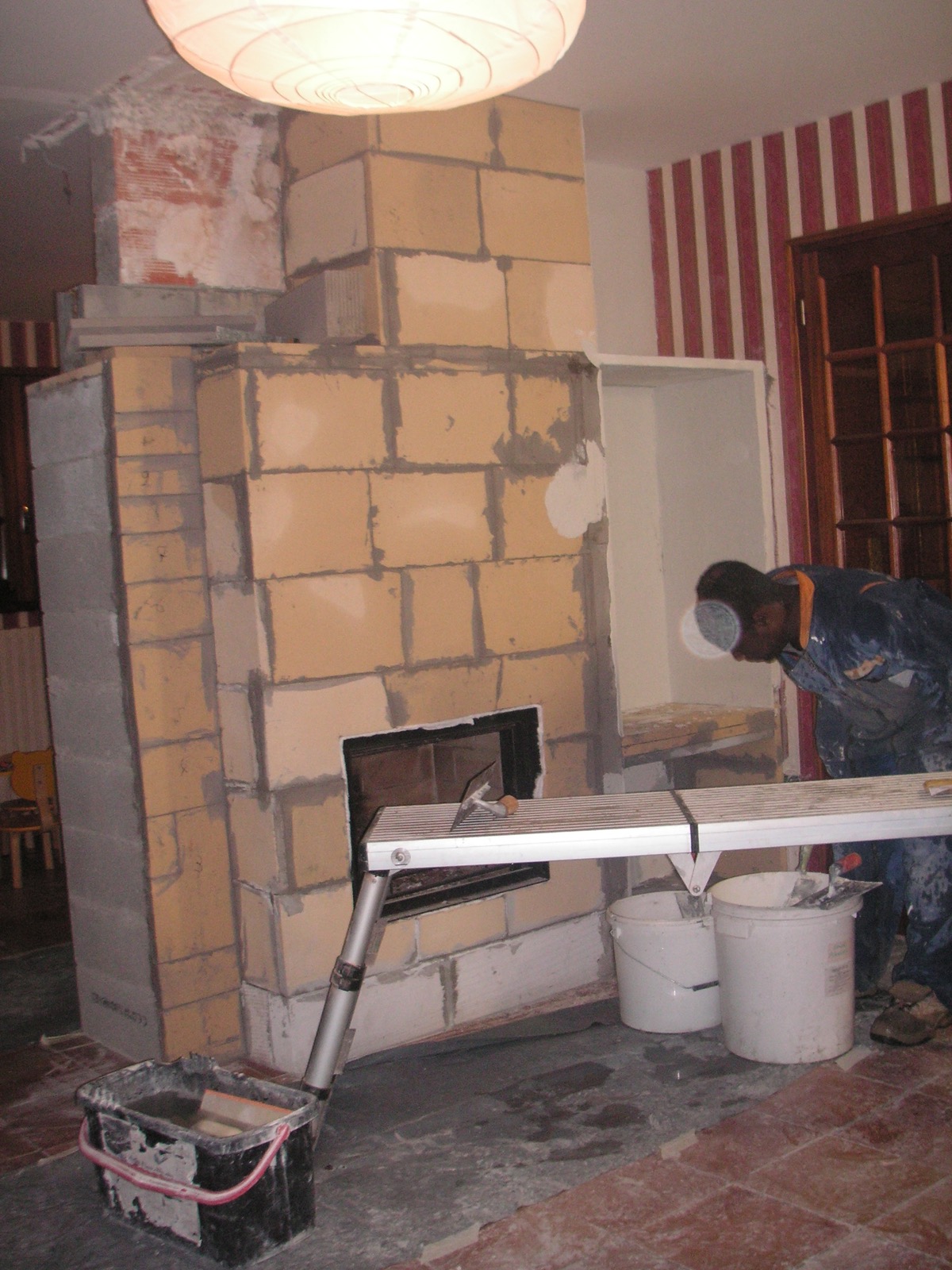
The advantage is consistency: every element leaves the mould to size, wall thicknesses are constant and the cross-section of the flue passages is guaranteed. The drawback is rigidity — an unforeseen constraint cannot be absorbed by recutting a block, as it can with small bricks.
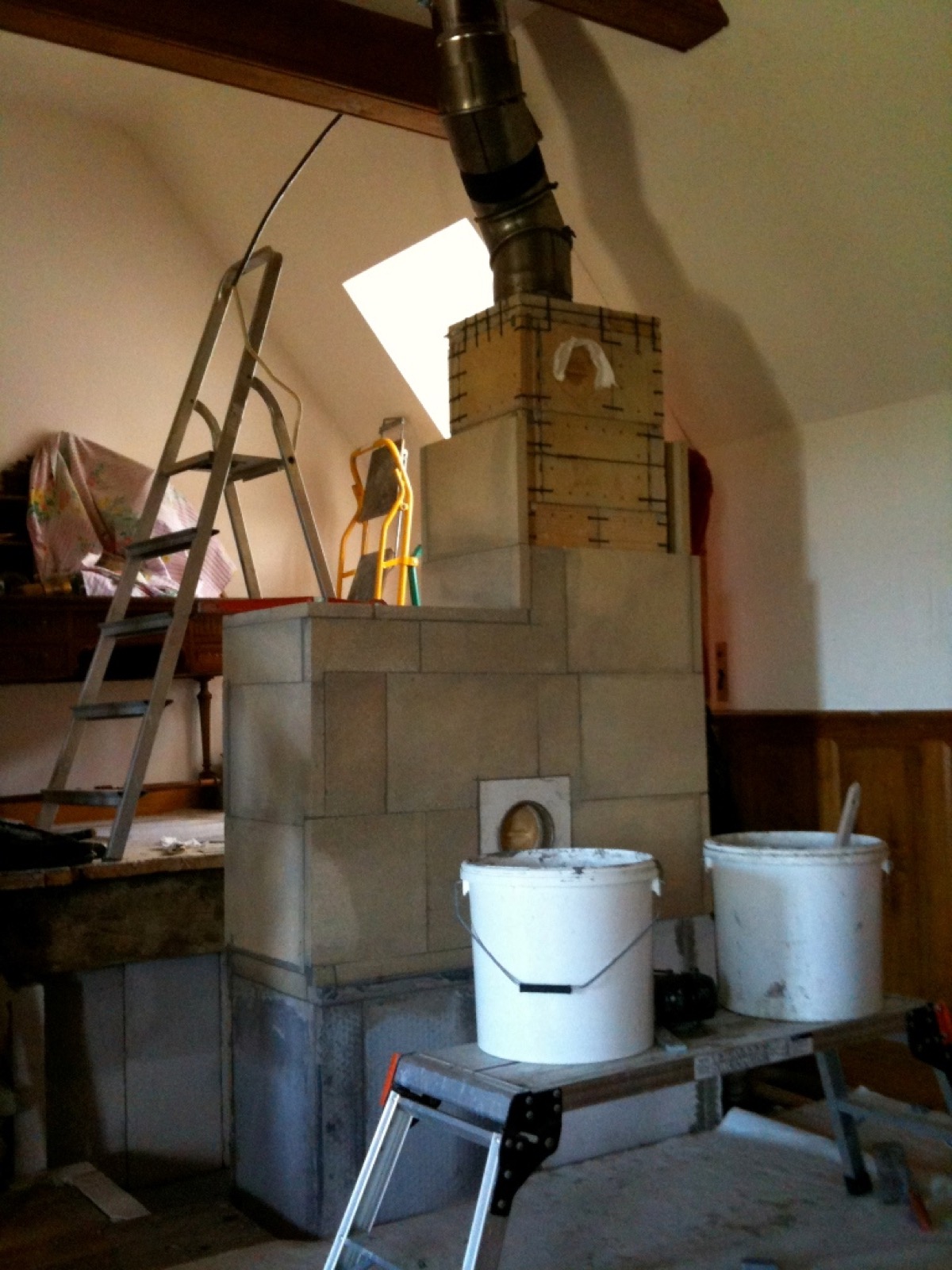
Then comes the cladding. The stove tiles are laid by hand, one by one, on the mass already built — here tiles with a grid relief, whose pattern demands a strict layout or the misalignment shows over the full height.
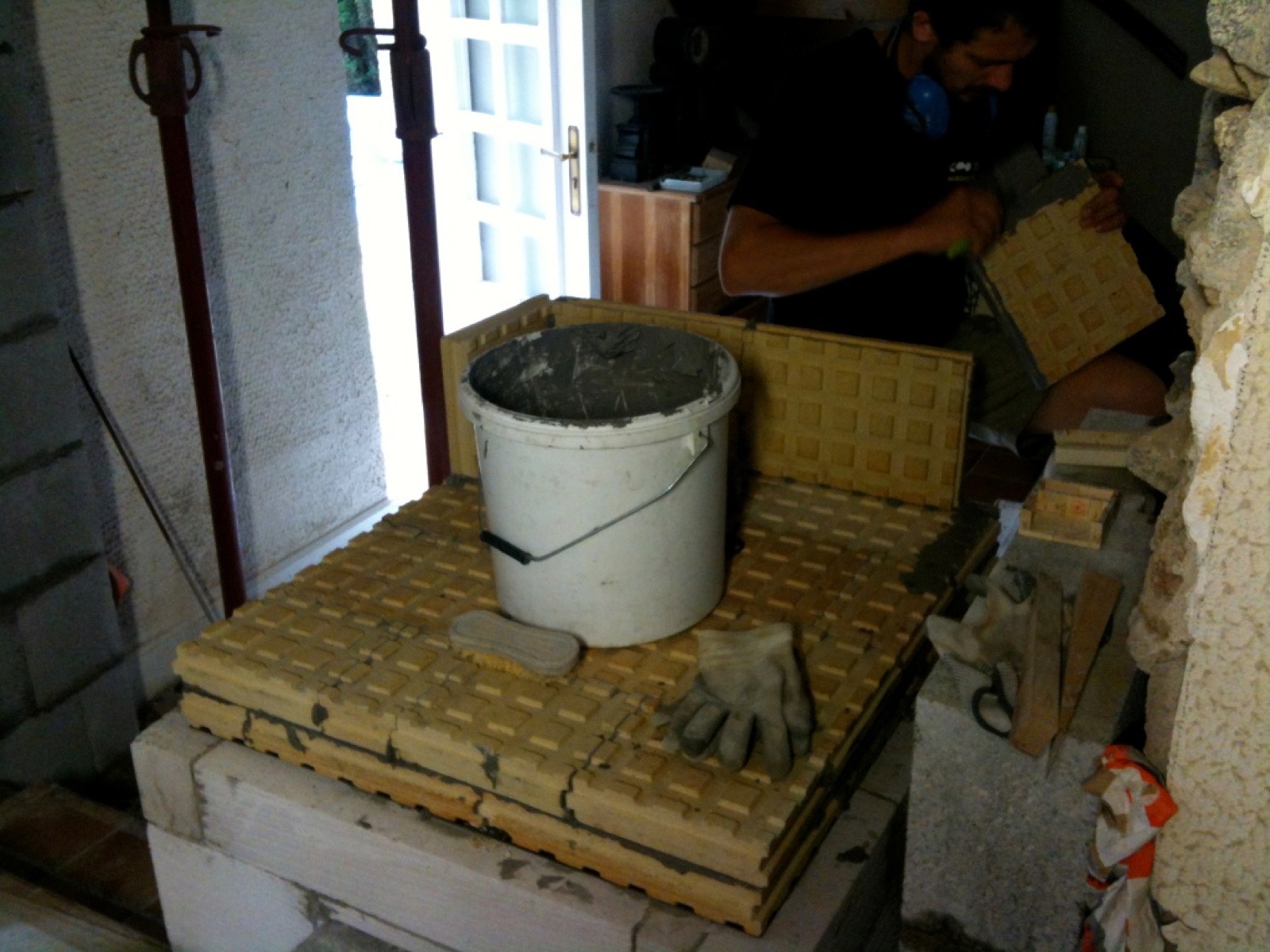
Stove tiles are not just decoration: they are an additional storage material, and their glaze makes the surface washable and dust-free — which matters for a unit that is touched and leaned against.
Projects from 2012.