
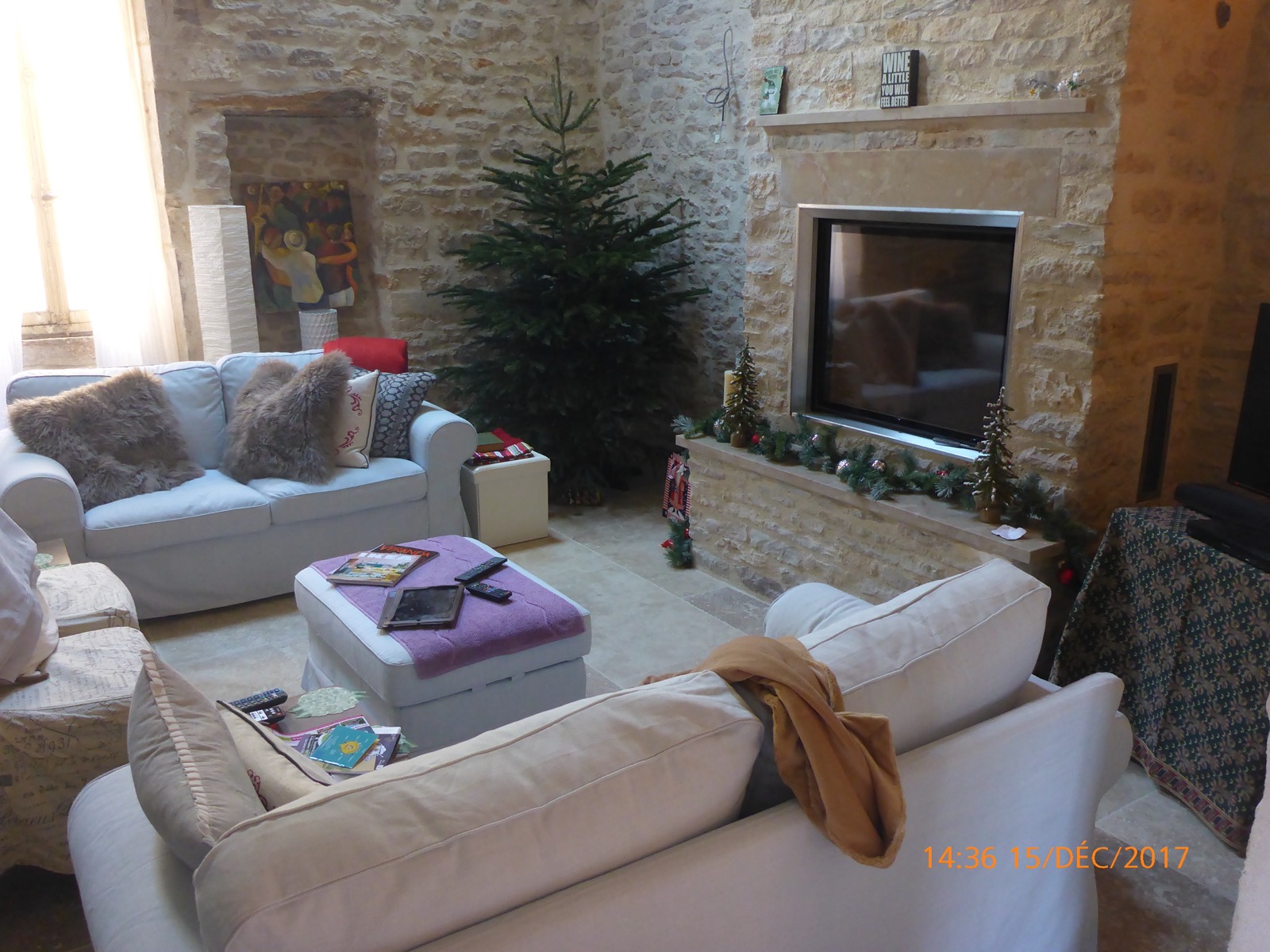
A masonry heater is usually finished with render or stove tiles. This one is clad in dressed stone, laid in regular courses, with a monolithic lintel above the firebox and a base shelf in the same limestone.
The choice makes sense in context: the house is stone, walls and gables exposed under the roof structure. A white rendered volume would have looked out of place; dressed stone, on the other hand, extends the building — to the point that the heater reads as a section of wall in which a firebox has been opened.
Technically, stone is not a front-rank heat-storage material: the useful mass remains the refractory masonry, hidden behind it. The stone is a facing, whose differential expansion against the heater core must be allowed for — hence the open joints and the lintel laid free rather than bedded in.
In the upper section, on the right, you can make out the convection grille that lets convection complete the radiant heat.
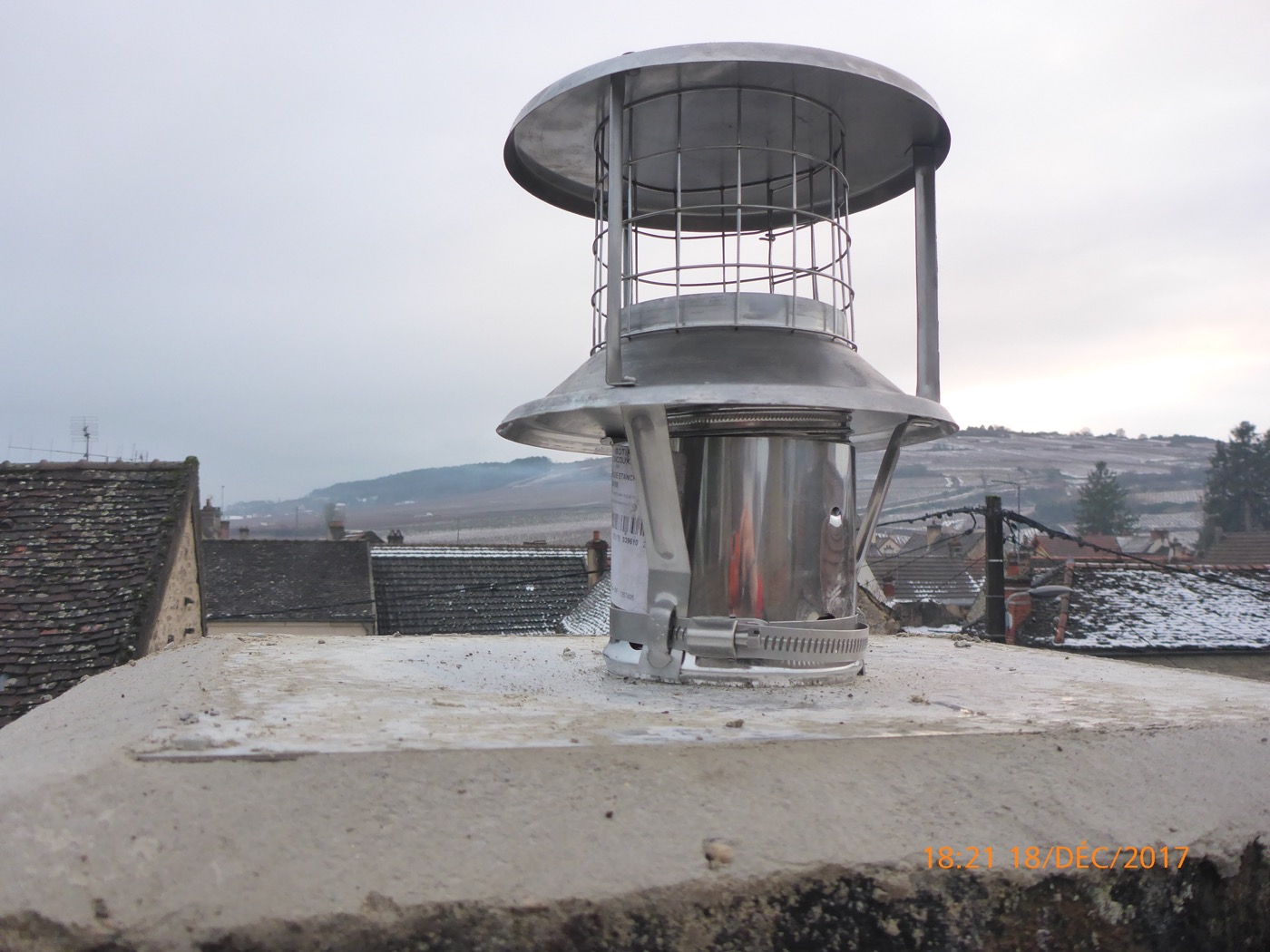
The invisible part of the work is up there: the stainless steel liner in the existing flue, and its cap. On an old house, bringing the flue up to standard governs everything else — a masonry heater only draws properly if the stack is sound and at the right height.
Project completed in December 2017.

